
Volume vs Quality
The UCAT Debrief - Week 6
Hi everyone,
Welcome to the Term 1 Holidays! For many applicants, this stage and the next 12 weeks are absolutely crucial for their UCAT Journies. Skills and practice developed here will determine final percentiles on the day. But before we get into the key relationship and focus for this period, some Key Updates
Key Updates
UAC Applications: 08 April - 30 September
Applications through Universities Admissions Centre opened on 8 April for students planning to apply to universities in New South Wales and the Australian Capital Territory.
The early bird application period runs until 30 September, with a significantly lower processing fee of approximately $82. After this date, the standard application fee increases to around $215.
It is important to remember that this is not a first come, first served system. Submitting your application earlier does not improve your chances of receiving an offer.
The Key Trap
One of the biggest traps students fall into at this point in the year is assuming that more questions automatically means more improvement.
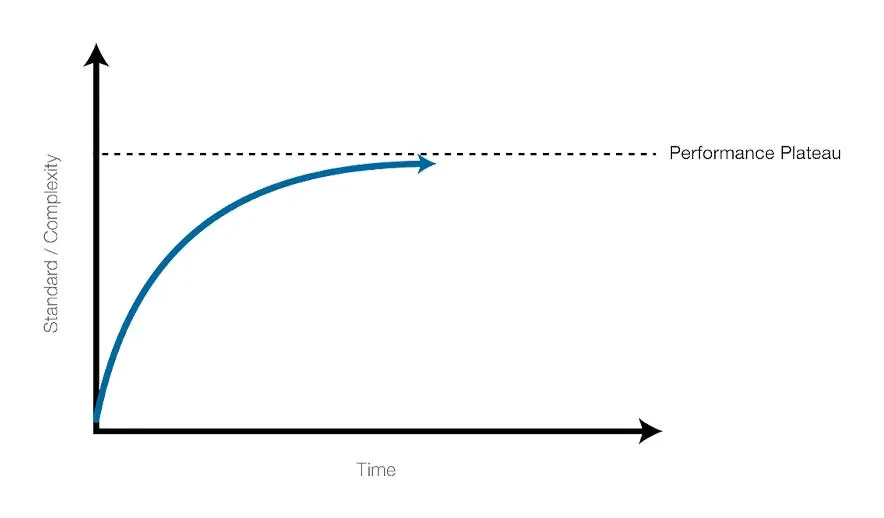
At the start of preparation, doing almost anything helps. Your score improves because everything is new. You are learning timing strategies, recognising question types, and becoming more familiar with how the UCAT works. Early on, even small amounts of practice can create big jumps.
But after a few months, something changes.
Students reach a point where they are doing more questions, spending more time studying, and putting in more effort, but their scores stop moving.
This is where many students start to panic.
They think they need more motivation, more hours, more resources, more question banks, or more mocks.
Usually, that is not the issue.
The issue is that they have reached the point where quantity alone is no longer enough.
When More Questions Stops Working
At this stage, the difference between average students and top students is not usually how many questions they do.
It is how deliberately they practise.
A lot of students spend their time doing questions in a very passive way. They sit down, do a set, check their score, feel either happy or annoyed, then move on to the next thing.
That feels productive because it is still work.
But often, it is just activity without improvement.
“It’s not that I’m so smart, it’s just that I stay with problems longer.” — Albert Einstein
What Plateauing Actually Looks Like
Plateauing happens when students keep repeating the same habits, the same mistakes, and the same weak patterns without changing anything.
They may be working hard, but they are not creating enough new stimulus for the brain to adapt.
The same thing happens in the gym.
If you walk into the gym every week and lift the exact same weights, for the exact same reps, with the exact same intensity, eventually your body stops changing. You maintain your current level, but you stop improving.
UCAT preparation works the same way.
You cannot expect major score jumps if you are doing the same type of work, in the same way, every week.
Deliberate Practice vs Passive Practice
Improvement requires deliberate practice.
Deliberate practice means you are not just doing questions. You are identifying specific weaknesses, targeting them directly, and forcing yourself to improve them.
For example:
If your VR timing is poor, deliberate practice might mean doing shorter timed VR sets with an emphasis on skipping difficult passages earlier.
If you repeatedly make mistakes on DM syllogisms, deliberate practice might mean isolating those question types and doing them untimed until the logic becomes clearer.
If QR calculations are slowing you down, deliberate practice might mean working on calculator speed and estimation rather than simply doing more full QR sets.
That is the difference.
One student says, “I did 100 questions today.”
Another student says, “I realised I keep losing marks on long VR passages and difficult QR calculations, so I spent an hour specifically training those.”
The second student is much more likely to improve.
The Little Black Book Matters Even More Now
This links directly back to the idea of the Little Black Book.
One of the reasons the Little Black Book is so powerful is because it forces deliberate practice.
Without a system like that, most students review emotionally. They finish a set, get annoyed about the questions they missed, quickly read the explanations, and then move on.
The problem is that once you move on, those mistakes often disappear into the void. You vaguely remember that you struggled, but you do not actually know what the recurring pattern was.
The Little Black Book changes that.
It turns random mistakes into visible patterns.
Once you have a record of your mistakes, you stop preparing vaguely and start preparing deliberately. You are no longer saying “I need to do more VR.”
You are saying things like:
“I keep rereading long passages.”
“I overcommit to difficult QR calculations.”
“I keep missing keywords like except or most likely.”
“I change my answer too often in DM.”
That is a completely different level of preparation.
The Little Black Book helps bridge the gap between doing questions and actually improving from them. Instead of just measuring how many questions you completed, you start measuring what those questions taught you.
Not All Question Volume Is Equal
Fifty rushed questions with poor review are often worth less than fifteen questions with excellent review.
If you are racing through questions just to hit a number, you are often training yourself to repeat the same mistakes faster.
But if you slow down, review properly, identify patterns, and revisit your weak areas, then every question becomes more valuable.
This is especially important during the Term 1 holidays and the start of Term 2.
This is the point in the year where students need enough volume to improve, but also enough quality to make sure that volume is actually useful.
What Good Practice Should Actually Include
Your preparation should probably include a mix of:
Untimed learning to build understanding
Timed sets to improve pacing
Mini mocks to build endurance
Full mocks to simulate pressure
Review sessions to identify patterns
Targeted practice on your weakest areas
If all you do is full mocks, you may become very good at exposing weaknesses without actually fixing them.
If all you do is untimed practice, you may become very good at solving questions without being able to do them fast enough.
The best preparation usually combines both.
Maintenance vs Improvement
This is also where students need to understand the difference between maintenance and improvement.
A small amount of UCAT each week is often enough to maintain your current level.
But improvement requires more.
It requires:
Enough repetition for the brain to adapt
Enough review for patterns to become visible
Enough deliberate practice for those patterns to actually change
That is why the students who improve the most are usually not the students who simply work the hardest.
They are the students who work the smartest.
They know exactly what they are trying to improve.
They know why they are getting questions wrong.
And they make sure every practice session has a purpose.
So the message for this week is simple:
Stop measuring your preparation only by how many questions you did.
Start measuring it by how much you learned from them.
Because in the UCAT, it is not the student who does the most questions who wins.
It is usually the student who gets the most value out of each one.
Next week, we’ll talk about mock exams.
See you then.
Lavya
Head of UCAT
